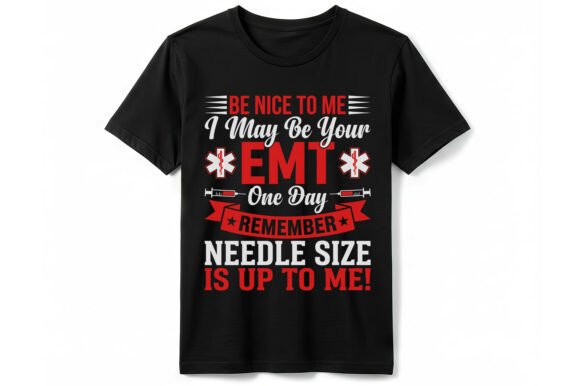
Embroidery Review: "Funny EMT Needle Size Humor" Design
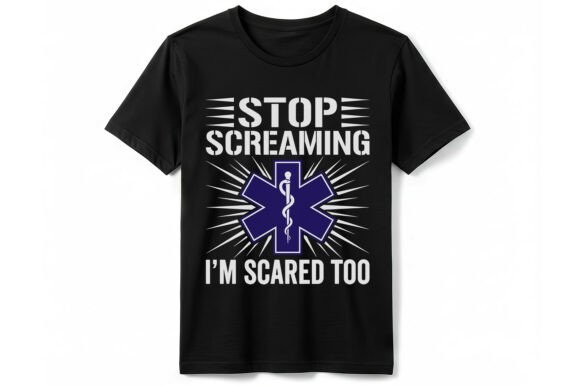
Let’s talk about this "Funny EMT Needle Size Humor" T-shirt design from the perspective of someone who actually needs to stitch it. As a designer who frequently turns digital graphics into real, tangible items for clients and my own small shop, I look at any new design with a very practical lens: how will it translate into thread? Will it sell? Will it hold up? This one, with its dark medical humor and medical star and syringe motif, presents a specific, interesting challenge.
The Immediate Personality: Witty, Niche, and Bold
The first impression is strong. This isn't a generic, cute graphic. It’s a confident piece of niche humor aimed squarely at first responders, medical professionals, or anyone with that particular brand of gallows humor. The mood it creates is clever and insider-y. Visually, the layout likely combines illustrative elements with text—that "witty paramedic quote about needle sizes." This means the design’s personality hinges on clarity. The humor won’t land if the stitching is fuzzy or the small details get lost.
For an embroidery project, this naturally belongs on items where that humor will be appreciated and seen. It feels perfect for a custom embroidered sweatshirt for an EMT, a tote bag for a nurse, or even a boldly placed patch on a work bag. It’s a statement piece, so it needs a canvas that supports that.
Where This Design Performs Brilliantly in Real Projects
Thinking through real-life embroidery situations, this graphic has clear winning applications. On a sturdy, premium cotton t-shirt or a heavyweight sweatshirt, the design can become a high-value, personalized gift. For a craft business or Etsy seller, it could make a fantastic finished product for a holiday gift—something like "funny nurse Christmas gift" has real appeal. Stitched onto the corner of a tea towel or apron for a medical-themed kitchen, it becomes unique boutique merchandise.
As a machine embroidery design, its success will depend on the file quality. Assuming a well-digitized file, the medical stars and syringe elements would likely use satin stitches or clean fill stitches for solid areas, making for a polished, professional look on custom apparel. For small business owners, it could be a strong addition to a line of first responder-themed products, enhancing brand consistency for shops focusing on medical, firefighter, or police humor.
The "graphics" nature of the original product means it’s probably adaptable. I could envision it reduced for a baby item—like a subtle, humorous touch on a baby bib for a paramedic parent—or enlarged for a bold centerpiece on a pillow cover. It has high giftability and recognition within its target community, which directly boosts buyer engagement for creative entrepreneurs.
The Practical Pitfalls: Where to Use Caution
Now, the realistic designer notes. This is not a design I would blindly load and stitch. Any text-based, detailed graphic requires careful planning. First, hoop size: if the quote text is small, a tiny hoop on a curved surface like a cap could compromise stitching clarity. Tiny lettering needs perfect digitizing to avoid filled-in letters.
Texture and fabric color matter immensely. On thin or stretchy fabric, like a lightweight tee, dense stitch areas might cause puckering without the right stabilizer. On dark fabric, thread color contrast is paramount—you’d need to test to ensure the lighter elements of the medical stars pop. Layered garments with seams might interrupt the layout.
Also, consider the product’s life. An item like an embroidered patch for a work bag needs durability; a satin stitch border on a syringe might wear if not dense enough. For products needing frequent washing, like kitchen towels, stitch density and stabilizer choice are critical to maintain that handmade presentation and customer trust over time.
Translating Digital Graphics to Stitched Reality
Here’s a natural scenario: I’m preparing a custom embroidered tote bag as a gift for a retiring paramedic. I choose this "Funny EMT Needle Size Humor" design. My immediate process isn’t about the joke; it’s about execution. I’ll test the embroidery file on scrap fabric of the same weight and texture as the tote. I check the stitch density, especially in any decorative accents, to ensure it won’t be too stiff or too loose.
I review the small details in a black and white mockup to see how they’ll look without color influencing my judgment. Comparing how it appears on light versus dark fabric backgrounds helps me decide thread colors—perhaps a bright white for the stars on a navy tote. Using proper stabilizer is non-negotiable for a tote bag’s woven fabric.
The design’s visual appeal as a finished product hinges entirely on this prep work. A clean, sharp stitch makes it look professional and valuable; a messy one makes it look amateur, even if the concept is hilarious.
Essential Designer Notes Before You Stitch or Sell
- Always test on scrap first. This is your safety net for any machine embroidery design.
- Check thread color contrast against your final fabric. Don’t assume the digital preview colors are final.
- Inspect the small details in the file. Look for potential trouble spots like tight corners in the syringe or thin running stitch lines.
- Confirm the hoop size required and whether it fits your intended product area, like a baby clothes front or a cap panel.
- Use printable mockups to visualize the final product for your Etsy listings or digital product previews, but remember they are not a substitute for a stitch test.
- Most importantly, confirm licensing. Before selling finished items or commercial embroidery projects, verify that the digital embroidery file or graphic is licensed for commercial use. This protects your craft business.
The Final Judgment: A Niche Winner with Careful Handling
In summary, the "Funny EMT Needle Size Humor" T-shirt design is a potent niche asset for embroidery designers and makers. It has a strong, specific audience that will appreciate the handmade product. Its value lies in its clever concept, but its success lies in your technical execution. For personal gifts, it can be a heartfelt, humorous hit. For small shop products, it can differentiate your offerings and attract a dedicated customer base.
Approach it not as a simple graphic, but as a design that demands respect for the embroidery process. With careful testing and adaptation to the right project—a sturdy sweatshirt, a durable tote, a well-placed patch—it will stitch up into a product that feels professional, engaging, and genuinely funny. It’s a design that reminds us that the best embroidery projects start with a great idea, but are finished with meticulous, practical craft.